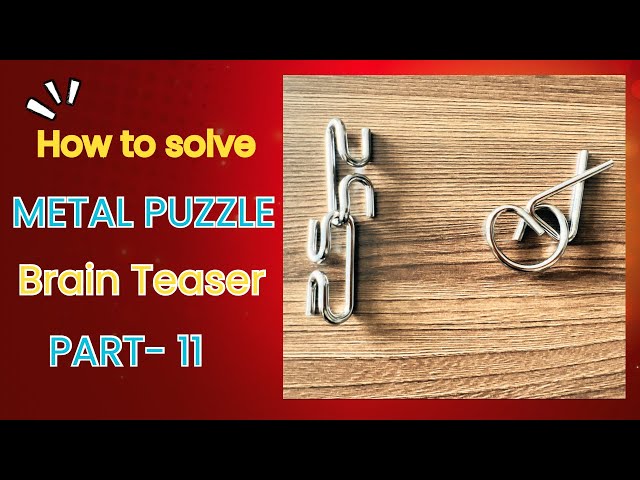
Are you staring at that tricky metal puzzle toy on your desk, wondering how to finally solve it? You’re not alone.
These puzzles are designed to challenge your mind and test your patience. But what if you could unlock the secret steps that make solving them easier and more satisfying? You’ll discover simple, clear techniques to crack your metal puzzle toys.
By the end, you’ll feel the thrill of victory and the joy of mastering a puzzle that once seemed impossible. Ready to turn frustration into fun? Let’s dive in.
Types Of Metal Puzzle Toys
Metal puzzle toys come in a variety of forms, each offering a unique challenge to your problem-solving skills. Understanding the different types can help you choose the right puzzle to test your patience and dexterity. Here’s a closer look at some popular categories that you might find intriguing.
Classic Ring Puzzles
Classic ring puzzles often involve one or more metal rings linked together in a way that seems impossible to separate. The goal is to figure out the exact moves needed to free one ring from the others.
These puzzles demand careful observation and a strategic approach. I once spent over an hour trying to separate a simple two-ring puzzle, only to realize that a single, subtle twist was the key. Have you ever noticed how sometimes the solution is simpler than it looks?
Interlocking Disentanglement Puzzles
Interlocking puzzles consist of multiple metal pieces that fit tightly together. Your task is to take them apart and then put them back together again.
These puzzles challenge your spatial reasoning and patience. Each piece must be moved in a precise sequence, which makes guessing the solution almost impossible. When you finally succeed, the feeling of accomplishment is undeniable.
Wire And Loop Challenges
Wire and loop puzzles usually feature a metal loop that must be maneuvered around a fixed wire structure without bending or forcing the pieces. These puzzles test your hand-eye coordination and fine motor skills.
Patience plays a huge role here. You might find yourself repeating the same moves, only to realize a tiny adjustment changes everything. What small change can you make next time to move closer to the solution?
Essential Tools And Techniques
Mastering metal puzzle toys requires more than just luck; it demands the right approach and mindset. Essential tools and techniques help you navigate the twists and turns of these intricate designs. Before diving into the puzzle, understanding how to observe, position your hands, and interpret visual clues can dramatically improve your success rate.
Observation And Patience
Careful observation is your first tool. Take a moment to look at the puzzle from all angles without rushing. Notice how the pieces interlock and where there might be slight gaps or movements.
Patience is just as important. You might feel tempted to force pieces apart, but gentle, steady movements often reveal hidden mechanisms. Have you ever tried pushing too hard and ended up making the puzzle more complicated?
Hand Positioning Tips
Your hands are your primary tools when solving metal puzzles. Positioning them correctly can give you better control and precision. Hold the puzzle firmly but avoid gripping too tightly to prevent fatigue and accidental damage.
Use your thumbs to apply subtle pressure while your fingers stabilize the other parts. This balance allows you to test movements without losing control. Try shifting your grip if you feel stuck; sometimes a small adjustment can make all the difference.
Using Visual Clues
Metal puzzles often hide visual hints that guide your next move. Look for scratches, worn spots, or slight discolorations that suggest frequent contact points. These marks can reveal where pieces slide or rotate.
Pay attention to symmetry and patterns. If one side looks like it should mirror the other, experimenting with matching movements might lead to a breakthrough. Have you noticed subtle design details that others might miss?
Step-by-step Solving Strategies
Solving metal puzzle toys requires patience and a clear plan. Following step-by-step strategies helps break down the challenge. These strategies guide your thinking and hand movements. They improve your chances of solving the puzzle without frustration.
Analyzing Puzzle Structure
Start by examining the puzzle’s shape and parts. Notice how pieces connect or overlap. Look for gaps or joints that might move. Understanding the structure reveals possible ways to separate pieces. Handle the puzzle gently to feel how parts shift.
Identifying Movement Patterns
Focus on how pieces can move. Try sliding, twisting, or lifting parts slowly. Some puzzles require a specific sequence of moves. Watch for repeated motions that open new spaces. Remember, small movements often lead to progress.
Trial And Error Methods
Test different moves without rushing. If a move doesn’t work, reverse it carefully. Keep track of successful and unsuccessful attempts. Use a process of elimination to narrow options. Patience is key—each try teaches something new.

Credit: kubiyagames.com
Common Mistakes To Avoid
Trying to force pieces can cause damage and frustration. Ignoring small details often leads to missed solutions. Patience and careful observation are key to solving metal puzzles correctly.
Solving metal puzzle toys can be both a fun and challenging experience. Yet, many enthusiasts hit roadblocks because of common mistakes. Identifying these errors can save you time and frustration, turning your puzzle-solving sessions into more rewarding experiences. Here’s what to watch out for:Forcing Pieces
One major mistake is trying to force pieces together. It’s tempting to use extra muscle when a piece doesn’t fit, but this can damage the puzzle or even hurt you. Metal puzzles are designed to fit together smoothly, so if it doesn’t glide into place, rethink your approach. Remember, if you’re forcing it, you’re likely on the wrong track. Take a step back, and explore other possibilities. Sometimes, a small tweak in angle or pressure can make all the difference.Ignoring Subtle Details
Metal puzzles often rely on intricate designs and tiny details. Overlooking these can lead you to incorrect solutions. Pay close attention to grooves, indentations, and patterns. Each piece tells a part of the story. A small notch or a barely visible seam could be the key to unlocking the next step. Keep your eyes peeled for these subtle hints; they’re more crucial than you might think.Rushing The Process
Patience is key when it comes to solving puzzles. Rushing through can cause you to miss important clues or misinterpret the puzzle’s structure. Slow down and enjoy the journey. Solving puzzles is not just about reaching the end but also about the insights you gain along the way. Ask yourself, what can I learn from this moment of pause?Improving Puzzle Solving Skills
Improving your skills at solving metal puzzle toys takes time and practice. Each puzzle has unique challenges that sharpen your thinking and hand coordination. Developing these skills makes solving puzzles more enjoyable and less frustrating.
Focus on learning new techniques and observing patterns. Small improvements build your confidence and speed. Keep a steady pace and stay patient with complex puzzles.
Practicing Different Puzzles
Try various metal puzzles with different difficulty levels. Different puzzles teach new problem-solving strategies. Switching puzzles keeps your mind sharp and adaptable.
Practice regularly to improve your finger dexterity and patience. The more puzzles you solve, the better you understand common mechanisms. This experience helps you solve unfamiliar puzzles faster.
Learning From Others
Watch videos or read guides from other puzzle enthusiasts. Seeing different approaches broadens your perspective. You can learn new tricks and avoid common mistakes.
Join puzzle communities online or in person. Sharing experiences helps you stay motivated and discover fresh ideas. Asking questions can clear up confusing steps quickly.
Tracking Progress
Keep a journal of puzzles you solve and your solving time. Tracking progress shows your improvement over weeks or months. It helps identify puzzles that challenge you most.
Set small goals to stay motivated. Celebrate improvements like faster solving or fewer errors. This habit builds confidence and encourages consistent practice.

Credit: www.youtube.com
Tips For Quick Success
Solving metal puzzle toys can be fun and challenging. Quick success comes from smart strategies. These tips help you solve puzzles faster and enjoy the process more. Focus and patience play big roles. Use these simple methods to improve your skills.
Breaking Down Complex Puzzles
Start by looking at the puzzle carefully. Notice how pieces fit together. Break the puzzle into smaller parts. Solve each part one at a time. This makes the whole puzzle less scary and easier to manage. Work step by step. Avoid rushing to finish all at once.
Staying Calm And Focused
Stay calm while solving. Stress can block your thinking. Take deep breaths if you feel stuck. Focus on one move at a time. Avoid distractions around you. Quiet places help your mind work better. Calm and focus improve your chances of success.
Using Memory Techniques
Use memory tricks to remember steps. Picture the moves you make in your mind. Repeat the sequence silently. Write notes or draw simple diagrams if needed. This helps avoid repeating mistakes. Remembering past moves saves time and frustration.

Credit: macanoco.com
Frequently Asked Questions
What Are The Best Strategies To Solve Metal Puzzle Toys?
Start by examining the puzzle carefully. Identify movable parts and their connections. Use trial and error gently. Patience and observation help reveal solutions. Breaking the puzzle into smaller sections often simplifies the process.
How Can I Improve My Skills With Metal Puzzles?
Practice regularly with different puzzle types. Focus on understanding puzzle mechanics. Watch tutorials for tricky designs. Develop problem-solving and spatial reasoning skills over time. Consistent practice increases speed and accuracy.
Are There Tools Allowed For Solving Metal Puzzles?
Most metal puzzles are designed to be solved by hand. Using tools can damage the puzzle and reduce challenge. However, some puzzles may allow gentle use of objects to move pieces. Always check puzzle instructions before using tools.
Why Do Metal Puzzle Toys Require Patience?
Metal puzzles often have complex interlocking parts. Rushing can cause frustration or damage. Patience allows careful analysis and precise movements. Taking breaks can improve focus and reduce errors. Patience leads to successful and satisfying solutions.
Conclusion
Solving metal puzzle toys takes patience and careful thinking. Start slow, study the shapes, and try different moves. Each step helps you understand the puzzle better. Don’t rush or force pieces apart. Enjoy the process and learn from mistakes. With time, you will solve even the hardest puzzles.
Keep practicing and have fun with every challenge. The satisfaction of solving makes it worth the effort.