Are you looking for fun and simple ways to keep your cat entertained without spending a lot of money? Making your own DIY cat toys is easier than you think.
Not only will you save money, but you’ll also create personalized toys that your furry friend will love. Imagine seeing your cat happily chasing, batting, and pouncing on toys you made yourself. Ready to discover easy steps and creative ideas to make safe and exciting toys for your cat?
Let’s dive in and turn everyday items into hours of playful fun for your pet!

Credit: www.hgtv.com
Benefits Of Diy Cat Toys
Creating your own cat toys offers more than just a fun weekend project. It brings several benefits that improve your cat’s happiness and health, while also giving you a chance to connect and get creative. Understanding these benefits might inspire you to try making toys tailored just for your feline friend.
Cost Savings Compared To Store-bought Toys
Store-bought cat toys can add up quickly, especially if you want to keep your cat entertained with variety. DIY toys use materials you likely already have at home, like yarn, paper, or old fabric, saving you money. You can make several toys for the cost of just one store-bought item.
Think about how much you spend on toys that your cat might lose interest in after a few days. Wouldn’t it be great to replace those expenses with simple, homemade options that you can customize or replace cheaply and easily?
Customizing Toys For Your Cat’s Preferences
No two cats like the same thing. Some love to chase feathers, others prefer crinkly sounds or soft textures. Making your own toys lets you mix and match features until you find exactly what excites your cat.
For example, if your cat loves batting at strings, you can create a toy with different lengths and colors of yarn. If they’re more into puzzle toys, you can design something that challenges their hunting skills. Have you noticed what type of toy your cat ignores? Use that insight to build something better.
Promoting Mental And Physical Stimulation
DIY cat toys keep your cat’s mind sharp and body active. Toys that move, make noise, or require problem-solving encourage your cat to think and move more than passive toys. This can reduce boredom and destructive behavior.
For instance, a crumpled paper ball or a homemade feather wand can spark intense play sessions. When you see your cat excited and engaged, it’s a clear sign that your DIY toy is doing its job. How often do you observe your cat playing and learning from their toys?
Safe Materials For Cat Toys
Choosing safe materials is key when making DIY cat toys. Cats explore with their mouths and paws. Unsafe materials can harm them or cause choking. Use only non-toxic, soft, and durable items. This keeps playtime fun and worry-free.
Non-toxic Fabrics And Threads
Pick fabrics that are free from harmful dyes and chemicals. Cotton, felt, and fleece work great for cat toys. Use strong threads that won’t easily break or unravel. Avoid synthetic fabrics that can irritate your cat’s skin.
Using Recyclable Household Items
Household items can turn into fun toys. Clean bottle caps, cardboard, and paper tubes make good choices. Make sure these items have no sharp edges or small parts. Always wash items thoroughly before use to remove dust or dirt.
Avoiding Small Or Sharp Components
Small parts like beads or buttons can be swallowed. Sharp edges from broken items can hurt your cat. Cut strings and ribbons to safe lengths to prevent choking. Always check toys for loose parts before giving them to your cat.
Simple Diy Cat Toy Ideas
Simple DIY cat toys bring fun and exercise to your furry friend. These toys are easy to make and use items found around the house. Cats enjoy toys that move, make noise, or have interesting textures. Creating these toys saves money and strengthens your bond with your pet.
Sock And Catnip Toys
Use an old sock to create a soft toy for your cat. Fill the sock with dried catnip or a small amount of stuffing. Tie the open end securely with a knot or string. Cats love to bat and chew these toys. The scent of catnip makes them irresistible.
Cardboard Puzzle Feeders
Cut small holes in a cardboard box or egg carton. Place treats inside the compartments. Cats must paw or nudge the toy to get the treats. This activity keeps their mind sharp and encourages natural hunting skills. Use non-toxic cardboard for safety.
Feather Wand Toys
Attach feathers to the end of a stick or pencil with glue or tape. Move the wand slowly to mimic the movement of birds or insects. Cats enjoy chasing and jumping after the feathers. This toy helps with exercise and mental stimulation.
Pom-pom Balls
Make soft balls from yarn or buy small pom-poms. Make sure they are large enough to avoid swallowing. Toss the balls for your cat to chase and bat around. These lightweight toys are perfect for indoor play and easy to store.

Credit: smart.dhgate.com
Step-by-step Toy Making
Making your own cat toys can be fun and rewarding. It lets you create personalized playthings that your cat will love. You don’t need fancy materials—just some simple household items and a little creativity.
Creating A Sock Catnip Toy
Take an old sock and fill it with dried catnip and some soft stuffing like cotton or fabric scraps. Tie a knot at the open end to keep everything inside.
You can add a few bells or small crinkly paper pieces inside to make it more exciting. Your cat will enjoy batting it around and smelling the catnip scent.
Building A Cardboard Puzzle Feeder
Grab a small cardboard box and cut holes just big enough for your cat’s paw to reach inside. Place treats or kibble inside the box.
Your cat will have to figure out how to fish out the treats, turning snack time into a stimulating game. This encourages problem-solving and slows down fast eaters.
Assembling A Feather Wand
Attach a few colorful feathers to one end of a stick or a sturdy straw using tape or string. Make sure the feathers are securely fastened to avoid choking hazards.
Wave the wand in front of your cat to mimic the movements of birds or insects. This simple toy can spark your cat’s hunting instincts and give you both a chance to bond during playtime.
Encouraging Play And Interaction
Creating simple cat toys at home boosts your pet’s curiosity and energy. Interactive play helps build a strong bond and keeps cats happy and healthy. Using everyday items, you can easily make fun toys that invite your cat to explore and engage.
Encouraging Play and Interaction with your cat strengthens your bond. Cats love toys that mimic prey. DIY toys can be simple yet effective. Creating toys yourself ensures they are safe and tailored to your cat’s preferences. Cats need mental and physical stimulation. Playtime keeps them active and happy. Engaging your cat with homemade toys can be fun for both of you.Introducing New Toys To Your Cat
Introduce new toys slowly to avoid overwhelming your cat. Place a new toy in their favorite spot. Let them explore it at their own pace. Observe how they interact with it. If they show interest, engage them in play. Use positive reinforcement like treats. This builds a positive association with the toy.Rotating Toys To Maintain Interest
Cats can lose interest in toys quickly. Rotate their toys weekly to keep them engaged. Hide some toys and bring them back later. This keeps them curious and excited. It mimics the changing environment in the wild. New toys spark interest and encourage play. Use different textures and shapes for variety.Engaging In Interactive Play Sessions
Interactive play strengthens your bond with your cat. Use toys that require your involvement, like wands or strings. Move the toy to mimic prey behavior. Encourage your cat to chase and pounce. Keep sessions short but frequent. This keeps their attention and prevents boredom. Interactive play also provides mental stimulation.Maintaining And Cleaning Toys
Maintaining and cleaning DIY cat toys is key to keeping your cat safe and happy. Regular care prevents dirt buildup and extends the life of the toys. It also helps avoid germs that can harm your cat.
Simple cleaning routines keep toys fresh and ready for play. Checking toys often helps spot damage early. This stops your cat from getting hurt by broken parts.
Washing Fabric Toys Safely
Use gentle soap and warm water to clean fabric toys. Hand washing is best to protect delicate materials. Rinse well to remove all soap. Air dry completely before giving toys back to your cat.
Avoid strong detergents or bleach. These chemicals can irritate your cat’s skin or mouth. Machine washing may damage small toys or sewn parts.
Inspecting For Wear And Tear
Check toys regularly for loose threads, holes, or broken pieces. Look inside fabric toys for stuffing coming out. Make sure no small parts can be swallowed. Remove or repair toys with damage immediately.
Regular inspection keeps playtime safe. It also helps you decide when a toy needs replacing.
Replacing Toys When Needed
Replace toys that are torn or heavily worn. Old toys can harbor bacteria or sharp edges. Use simple materials to make new toys. Keep your cat interested with fresh, safe playthings.
Rotating toys helps keep your cat curious and active. Store unused toys in a clean, dry place.
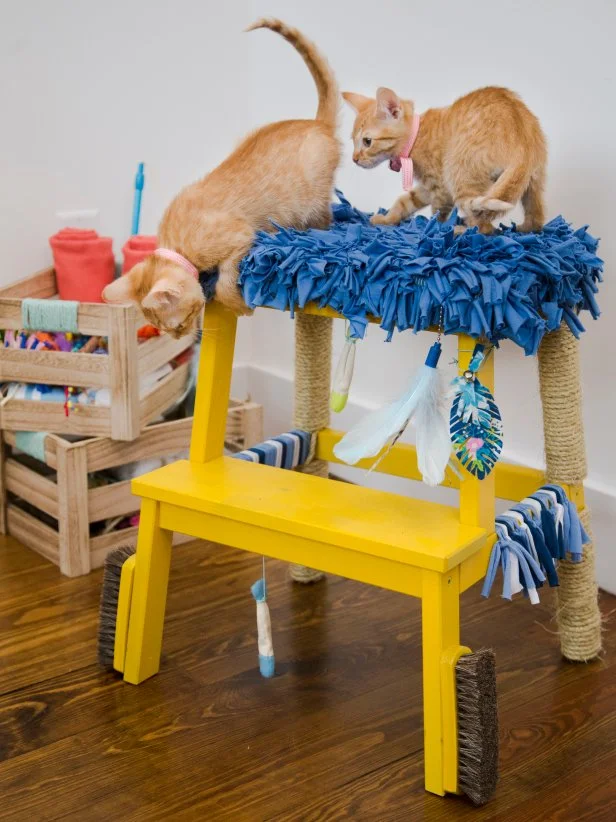
Credit: www.hgtv.com
Frequently Asked Questions
What Materials Do I Need For Easy Diy Cat Toys?
You need simple items like yarn, feathers, fabric scraps, and empty toilet paper rolls. These are safe, affordable, and easy to find. Using household materials saves money and encourages creativity in making fun toys for your cat.
How Can I Make A Diy Cat Toy Safe?
Avoid small parts that can be swallowed or toxic materials. Use non-toxic glue and secure all pieces firmly. Always supervise your cat during playtime to ensure the toy remains safe and intact.
Which Diy Cat Toys Do Cats Like Most?
Cats enjoy toys that mimic prey, such as feather wands and crinkly balls. Interactive toys that move or make noise also attract their attention. Experiment with different textures and shapes to find your cat’s favorite.
Can Diy Cat Toys Improve My Cat’s Health?
Yes, DIY toys encourage exercise and mental stimulation. Regular play helps prevent obesity and reduces stress. Engaging toys keep your cat active and happy, promoting overall well-being.
Conclusion
Making DIY cat toys is simple and fun. You only need a few safe materials. These toys keep your cat happy and active. Spending time creating toys also builds a strong bond. Try different ideas to see what your cat likes best.
Save money while giving your pet joy. Start small and enjoy the process. Cats love new things to play with every day. Keep toys clean and replace them when worn out. Happy cats, happy homes.