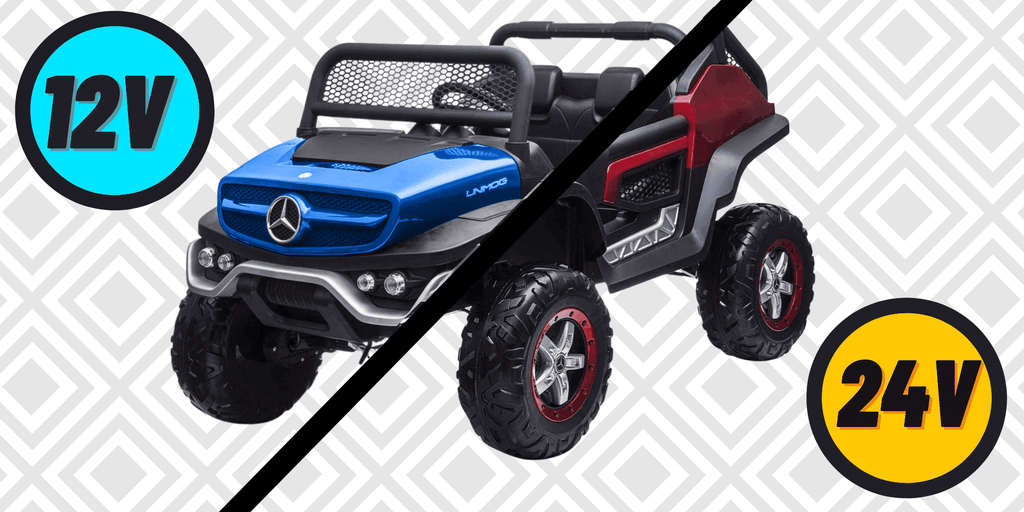
Are you wondering whether a 12V or 24V battery is the best choice for your child’s ride-on toy? Choosing the right voltage can make a big difference in how much fun your little one has and how long the toy lasts.
You want a ride-on that’s safe, fast enough for excitement, but not too fast to worry about safety. You’ll discover the key differences between 12V and 24V ride-on toys. By the end, you’ll know exactly which one fits your needs and keeps your child smiling.
Keep reading to find out what really matters when picking the perfect ride-on toy!
Voltage Basics
Understanding the voltage basics can help you choose the right ride-on toy for your child. Voltage impacts how fast and how long the toy will run. It also affects the toy’s power and overall performance, which are important to keep in mind before making a purchase.
What 12v And 24v Mean
Voltage measures the electric potential difference in a battery. A 12V battery means it provides 12 volts of power, while a 24V battery provides 24 volts. Simply put, 24V batteries have twice the electrical force compared to 12V ones.
You might ask, why does this matter? Higher voltage usually means the toy can have a stronger motor, which can make it faster or handle rougher terrain better. But it also can mean the toy is heavier or more expensive.
How Voltage Affects Performance
Voltage directly influences speed and torque in ride-on toys. A 24V toy generally offers higher speeds and better climbing ability. This is great if your child wants a more thrilling ride or needs to tackle hills.
On the other hand, 12V toys tend to have slower speeds, which might be safer and more suitable for younger kids. They also usually have shorter battery life, so playtime could be limited. Knowing your child’s age, experience, and where they’ll ride can help you decide which voltage fits best.
Have you noticed how some toys last longer or feel more powerful? That’s often because of their voltage. What kind of ride do you imagine your child enjoying most?

Credit: kidsvip.ca
Power And Speed
Power and speed are key factors when choosing between 12V and 24V ride-on toys. They directly affect how fast the toy moves and how quickly it responds to your child’s commands. Understanding these differences helps you pick the right option for your child’s fun and safety.
Comparing Acceleration
24V ride-on toys generally accelerate faster than 12V models. This means the toy reaches top speed more quickly, giving a more thrilling ride. If your child loves that quick burst of speed, 24V might be the better choice.
However, faster acceleration can be harder for younger kids to control. A 12V toy offers a gentler start, which can help beginners build confidence. Think about your child’s age and skill level before choosing acceleration power.
Top Speed Differences
Top speed varies noticeably between 12V and 24V ride-on toys. Typically, 12V toys max out around 4 to 5 mph, while 24V models can reach speeds of 6 to 8 mph or more. This difference can make playtime more exciting for older kids ready for faster rides.
But is top speed always better? Sometimes slower speeds allow for safer play in smaller spaces. Ask yourself where your child will use the toy most often and how much speed you feel comfortable with.
Battery Life And Efficiency
Battery life and efficiency are key factors in choosing between 12V and 24V ride-on toys. These aspects affect how long a child can play and how often the battery needs charging. Understanding these differences helps pick the right toy for your needs.
Run Time Expectations
12V batteries usually offer shorter run times. They fit smaller motors and lighter loads. Expect around 1 to 2 hours of playtime on a full charge.
24V batteries power bigger motors and carry heavier loads. These batteries provide longer play sessions, often lasting 2 to 3 hours.
Battery run time depends on factors like weight and terrain. Rough surfaces or inclines drain batteries faster.
Charging Considerations
12V batteries generally charge faster, taking 8 to 12 hours. This suits shorter play periods and quick turnarounds.
24V batteries need longer charging times, usually 12 to 18 hours. They require more careful charging to maintain battery health.
Both types benefit from using the correct charger. Overcharging can reduce battery life and efficiency.

Credit: kidsvip.ca
Safety Factors
Safety is a top priority when choosing between 12V and 24V ride-on toys. The voltage affects not just speed and power but also how safe the toy is for your child. Understanding these safety factors helps you make the right choice for your little rider’s well-being.
Impact Of Voltage On Safety
Higher voltage means more power and faster speeds. A 24V ride-on toy can reach speeds that might be too much for younger children to handle safely. On the other hand, 12V models typically offer slower speeds, making them easier to control and less likely to cause accidents.
Think about your own experience with kids’ toys. Have you noticed how some ride-ons feel too fast or hard to steer? That’s often linked to voltage. If your child is still developing coordination, a lower voltage might reduce the risk of falls or collisions.
Recommended Age And Weight Limits
| Voltage | Recommended Age | Weight Limit |
|---|---|---|
| 12V | 3 to 6 years | Up to 66 lbs (30 kg) |
| 24V | 6 years and older | Up to 130 lbs (59 kg) |
Manufacturers design ride-on toys with specific age and weight limits to keep children safe. Ignoring these recommendations can increase injury risk. For example, a 24V vehicle might be too powerful for a 3-year-old, making it harder for them to control and increasing the chance of tipping over.
Are you matching the toy’s specs with your child’s size and skill? This simple check can prevent many accidents and keep playtime fun and safe.
Cost And Maintenance
Choosing between 12V and 24V ride-on toys involves more than power and speed. Cost and maintenance play a big role. Understanding these factors helps in making a smart purchase. Both initial price and long-term upkeep affect overall value.
Price Comparison
12V ride-on toys are usually cheaper upfront. They suit younger kids and smaller budgets. 24V models cost more because they offer higher power and speed. The price difference can be noticeable, sometimes double or more.
Here is a simple price comparison:
| Voltage | Average Price Range |
|---|---|
| 12V | $80 – $150 |
| 24V | $150 – $300 |
Choosing 12V saves money initially but limits power and speed. 24V costs more but lasts longer for older kids.
Upkeep And Repairs
Maintenance for 12V toys is usually simpler and cheaper. Parts like batteries and motors cost less. Repair needs are fewer due to lower stress on components.
24V toys need more care. Their parts are bigger and more expensive. Batteries must be charged carefully to avoid damage. Repairs can cost more due to complex parts and higher power.
- 12V batteries last shorter but cost less to replace.
- 24V batteries have longer life but higher replacement cost.
- 12V motors are easier to fix or replace.
- 24V motors require professional service more often.
Regular checks and gentle use help both types last longer. Proper battery charging extends battery life. Clean and dry storage prevents damage.
Choosing The Right Voltage
Choosing between 12V and 24V affects speed and power in ride-on toys. Higher voltage means stronger performance but may use more battery. Understanding your child’s needs helps pick the right option.
Choosing the right voltage for ride-on toys involves understanding several key factors. The choice between 12V and 24V impacts performance and safety. Each voltage has its own benefits, suited for different needs and environments. To make an informed decision, consider the child’s age, weight, and where the toy will be used.Matching Voltage To Child’s Needs
Children of different ages have varying power requirements. Younger children often do well with 12V toys. These provide enough power without being overwhelming. Older children may prefer 24V toys for more speed and power. It’s essential to match the voltage to your child’s comfort and skill level.Environment And Usage Factors
The environment affects how well a ride-on toy performs. 12V toys work best on flat surfaces like pavements. For rough terrains, 24V toys offer better performance. Consider where the child will use the toy most often. Indoor use might favor 12V for safety and ease. Outdoor adventures often require the power of 24V.
Credit: kidsvip.ca
Frequently Asked Questions
Is 12v Or 24v Better For Ride-on Toy Speed?
24V ride-on toys generally offer higher speeds than 12V models. They are ideal for older kids seeking more thrill and power.
Which Voltage Lasts Longer In Ride-on Toy Batteries?
24V batteries usually last longer due to higher capacity. This means extended playtime compared to 12V batteries in ride-on toys.
Are 24v Ride-on Toys Safer Than 12v Ones?
Both voltages are safe if used as directed. However, 12V toys are better for younger children due to slower speed.
Does 24v Increase Ride-on Toy Motor Power?
Yes, 24V provides more motor power. This results in better performance on rough terrains and steeper inclines.
Conclusion
Choosing between 12V and 24V depends on your child’s needs and safety. A 12V ride-on toy suits younger kids and shorter playtimes. A 24V model offers more power and longer fun, but it’s best for older children. Think about speed, battery life, and how your child will use the toy.
Both options have their strengths. Pick the one that fits your family best. Safety and enjoyment should always come first.